Fire safety in tunnels is a critical concern for modern infrastructure, where the confined spaces can turn even minor incidents into catastrophic events. Tunnel fires pose significant risks, including loss of human life, extensive structural damage, potential collapse, and widespread economic disruption such as increased traffic congestion, reduced tourism, and harm to local businesses. Studies like the EU “UPTUN” Project have shown that heavy goods vehicles (HGVs) carrying ordinary loads can generate fires comparable to oil tankers, with temperatures exceeding 1300°C. The RWS curve, developed in Holland, represents the most severe fire scenario and is widely used for testing tunnel fire protection systems.
Effective fire safety in tunnels demands robust strategies to mitigate these dangers. While active systems like high-pressure water mist play a role, passive fire protection solutions are essential for maintaining structural integrity during extreme heat. Among these, Aestuver tunnel fireproofing boards stand out as a reliable method for tunnel fire protection, offering thermal insulation that prevents spalling and collapse, ultimately minimizing downtime and repair costs.
The Risks and Challenges of Tunnel Fires
Tunnel fires behave differently from open-air or building fires, often escalating rapidly due to confined spaces and limited ventilation. Typical temperatures range from 400°C for car fires to 1000°C for lorry fires, 1200°C for petrol tankers, and up to 1400°C for large petrol tankers. Reinforced concrete tunnel walls, while fire-resistive, are vulnerable to explosive spalling and integrity loss under such intense heat, potentially leading to collapse.
Historical incidents underscore these risks. The Channel Tunnel experienced fires in 1996, 2006, and 2008, causing structural damage without fatalities but requiring extensive repairs. Other notable events include the Summit Tunnel fire in the UK (1984), the Great Belt Tunnel TBM fire in Denmark (1994), the Daegu metro fire in South Korea (2003, 182 fatalities), and the Kaprun Funicular Railway Tunnel fire in Austria (2000, 155 fatalities). Road tunnel disasters like Mont Blanc (1999), Tauern (1999), and Gotthard (2001) resulted in multiple fatalities and prompted international reviews of tunnel fire safety.
Standards such as NFPA 502 classify tunnels into categories, with Categories B (300-1,000 m) and C (1,000 m+) often requiring fixed firefighting systems, though exceptions apply. The vulnerability of concrete to spalling in large fires highlights the need for enhanced tunnel fire protection measures to ensure safety for users, fire brigades, and the structure itself.
Overview of Fire Safety Strategies in Tunnels
Fire safety in tunnels encompasses both active and passive systems. Active systems, such as surpression systems, or high-pressure water mist, have been tested in real tunnels like Runehamar to demonstrate their ability to control fires from cars, trucks, or tankers, ensuring tenable conditions for evacuation and firefighting. However, passive fire protection solutions provide inherent resistance without needing activation, making them a cornerstone of reliable tunnel fire safety.
Passive measures focus on asset protection, minimizing downtime after incidents, and safeguarding fire service personnel from falling debris. Although not primarily a life safety issue—since extreme temperatures would already preclude human survival—passive protection is justified through societal cost-benefit analyses, considering quantitative risk assessments over the tunnel’s lifecycle. While active systems enhance conditions during fires, passive fire protection in tunnels offers maintenance-free reliability, particularly through methods like fire protection boards that act as thermal barriers against high-heat scenarios.
Passive Fire Protection Solutions: Core Methods
Passive fire protection in tunnels includes several approaches, each designed to shield structures from heat-induced damage. Sprayed-on materials, such as vermiculite/cement or perlite/cement systems, are applied directly to surfaces for insulation. Cementitious linings in the form of sacrificial layer provide additional fire resistance but may add weight and reduce useable space and require careful application. The addition of polypropylene fibres to concrete helps mitigate spalling by creating pathways for steam escape during heating, but such a solution works only once. The fibres melt in the temperature of around 170 deg C requiring costly repairs of the damaged concrete layer.
These solutions are tested against severe curves like RWS, with full-scale evaluations ensuring performance under compressive stress. Regulations, including those from the ITA Working Group 6 and CETU guidelines, emphasize justifying performance for road tunnel structures through rigorous testing protocols like Efectis-R0695:2020.
While these methods are effective, fire protection boards offer distinct advantages in many scenarios, integrating seamlessly with standards like NFPA 502 and PIARC recommendations.
Aestuver Tunnel Fireproofing Boards as a Passive Solution for Fire Safety in Tunnels
Fire protection boards are a premier passive fire protection solution for enhancing fire safety in tunnels. These rigid, prefabricated materials- cementitious boards with lightweight aggregates and glass-fibres —are designed to cover tunnel ceilings, side walls, slabs, or cable ducts. Unlike sprayed-on options, fire boards can be installed using precise layouts, either directly fixed to the support with mechanical anchors or incorporated as lost formwork during construction.
Key benefits of Aestuver tunnel fireproofing board include:
– High Thermal Resistance: Aestuver boards efficiently insulate concrete substrates, keeping interface temperatures below 380°C and reinforcement bars under 250°C, preventing spalling that can occur as low as 200°C.
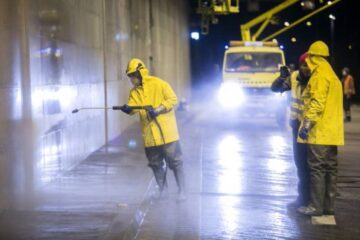
– Durability and Stability: Aestuver boards resist environmental conditions in tunnels, including water jet cleaning and high humidity. Unlike MgO-boards, which absorb excessive moisture above 84% RH leading to failures, quality Aestuver boards maintain integrity
– Ease of Installation and Maintenance: Boards can be applied in a single layer with minimal wastage, a high-quality finish can be painted if aesthetics are important, eliminating the need for secondary cladding. Installation methods—such as lost formwork for bonding with concrete or post-construction fixing—ensure flexibility for both new builds and retrofits.
– Cost-Effectiveness: By minimizing structural damage, fire boards reduce repair needs and downtime, offering long-term savings. Projects like Heathrow Cargo Tunnel (35mm Aestuver Tx boards for 2-hour RWS protection) and Tuen Mun – Chek Lap Kok Link, Hong Kong showcase their proven performance in real-world applications.
– Versatility Across Tunnel Types: Suitable for road, rail, and metro tunnels, Aestuver fireproofing boards protect escape passages, ventilation ducts, and steel bulkheads, as seen in the Louis-Hippolyte-La Fontaine Tunnel in Canada. They complement systems thinking by interconnecting with ventilation and evacuation strategies.
In comparison, while polypropylene fibres reduce spalling internally and sprayed mortars provide quick application, fire boards excel in providing a durable, non-combustible barrier that enhances overall tunnel fire protection without ongoing maintenance demands.
Benefits and Implementation of Passive Methods for Fire Safety in Tunnels
Implementing passive fire protection in tunnels, particularly with Aestuver tunnel fireproofing boards, yields multifaceted benefits for tunnel fire safety. They protect the structure from elevated temperatures and spalling and reduce socio-economic costs like traffic disruptions. Regulations should encourage design teams to adopt these approaches, redesigning rules to promote interconnected safety measures.
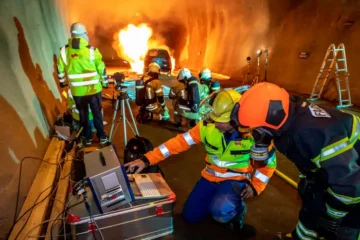
Testing protocols, such as those from Efectis and CETU, verify board performance through thermocouples at joints and interfaces, ensuring the tested products meet project needs. Aestuver fireproofing boards have been tested to both Efectis and CETU requirements. Quantitative risk analyses justify the investment, balancing upfront costs with long-term resilience. Such a study was carried out by the Aestuver and STUVA team and published in the following paper on the costs of tunnel fire protection.
Fire safety in tunnels is paramount to protecting lives, structures, and economies from devastating fires. Passive fire protection solutions, especially fire protection boards, provide a robust defense by offering superior thermal insulation, durability, and ease of installation.
By highlighting the benefits of fire boards—such as their ability to withstand extreme temperatures and minimize spalling—tunnel operators can achieve optimal tunnel fire safety.
Consult experts to integrate these boards per ITA, NFPA 502, and local standards, ensuring resilient tunnel fire protection for the future.

1 Comment
Passive Fire Protection in Tunnels - an introduction · 13 November 2025 at 9:07 am
[…] Tunnel fire protection and fire safety in tunnels […]