ISO Fire Curve

The ISO 834 curve, often referred to as the standard fire temperature curve, is a baseline thermal stress model used extensively in the construction industry.
It’s one of the many time-temperature fire curves which are also used in designing fire protection in tunnels.
It represents the minimum level of stress expected from an interior building fire, omitting the detailed phases of ignition, smoldering, and cooling. Despite its simplicity, the ISO curve is a fundamental tool for analyzing fire exposure in building components. Concrete spalling, a phenomenon which causes concrete damage due to fire also can occur.
The ISO 834 curve, commonly referred to as the standard fire temperature curve, is a crucial tool in fire safety engineering, providing a standardized approach to evaluating the fire resistance of building materials and structures. Its simplicity and broad applicability have led to its widespread adoption across many countries, where it forms the basis for national fire safety standards. Here, we explore how the ISO curve is integrated into the fire safety regulations of the UK, Poland, Germany, and China.
ISO Fire Curve in the national standards:
ISO Fire Curve in the United Kingdom
In the United Kingdom, the ISO 834 curve is integral to the British Standard BS 476: Part 20-24, which outlines the fire resistance testing procedures for building materials and structural components. These standards specify how various elements, such as walls, floors, and ceilings, should perform under fire conditions, with the ISO curve providing the benchmark for the time-temperature relationship during testing.
For example, in BS 476 Part 22, which deals with fire resistance of non-loadbearing elements like doors and windows, the ISO curve is used to assess whether these components can prevent the spread of fire and maintain their integrity for a specified period, usually 30, 60, 90, or 120 minutes. This testing ensures that materials used in construction can withstand the conditions of a typical fire, thus providing a critical safety margin in real-world scenarios.
ISO Curve in Poland
In Poland, the ISO 834 curve was incorporated into the Polish standard PN-B-02851-1, which dealt with fire resistance tests for construction products and building elements. This standard outlined the methods for determining the fire resistance of structural components, including walls, floors, and beams, using the ISO curve to simulate fire conditions.
The norm was withdrawn and superseded by:
Polish regulations require that materials used in buildings meet specific fire resistance criteria, often expressed as an “EI” rating, where “E” stands for integrity and “I” for insulation. The ISO 834 curve is used to test these properties, ensuring that building elements can maintain their function and prevent the spread of fire and smoke for the required time. For example, a wall classified as EI 60 must maintain its structural integrity and insulation properties for at least 60 minutes under the conditions represented by the ISO fire curve.
ISO Curve in Germany
In Germany, the ISO 834 curve is a foundational element in DIN 4102, the German standard for fire resistance of building materials and components. DIN 4102 is one of the most stringent fire safety standards in the world, and it relies heavily on the ISO curve to determine how materials behave in fire conditions.
The standard categorizes materials into various fire resistance classes (e.g., F30, F60, F90), indicating the number of minutes they can withstand fire exposure without losing their load-bearing capacity. For instance, a wall rated as F90 must endure 90 minutes of fire exposure according to the time-temperature profile of the ISO 834 curve. This classification is critical in ensuring that buildings can maintain their structural integrity long enough for occupants to evacuate safely and for firefighting operations to be conducted.
China
In China, the ISO 834 curve is embedded in the national fire safety standard GB/T 9978, which governs fire resistance tests for construction elements. Similar to other countries, the ISO curve in China is used to evaluate how building components, such as doors, windows, and structural elements, perform under fire conditions.
China’s fire safety regulations require that buildings meet specific fire resistance ratings, which are determined using the ISO curve as a reference. For example, in high-rise buildings, critical structural components must be able to resist fire for a specified duration (often 90 minutes or more), ensuring the building’s stability during evacuation and emergency response efforts. The use of the ISO 834 curve in GB/T 9978 standard tests provides a consistent basis for determining these fire resistance ratings, helping to ensure the safety and resilience of buildings throughout the country.
European Union
In the European Union, the ISO 834 curve is incorporated into the EN 1363-1 standard, which outlines general requirements for fire resistance tests. This standard applies to a wide range of building components, including walls, floors, and ceilings. The curve is used to evaluate how these elements perform under fire conditions, ensuring that they can maintain their structural integrity for a specified duration.
United States
In the United States, the ISO 834 curve is paralleled by the ASTM E119 standard, which is used by the American Society for Testing and Materials (ASTM). Although ASTM E119 is not identical to ISO 834, it serves a similar purpose, providing guidelines for fire resistance testing of construction materials and assemblies. The curve’s influence is evident in the approach taken by ASTM E119, where the time-temperature relationship mirrors that of the ISO curve.
Australia
Australia’s national fire resistance standard, AS 1530.4, also incorporates the ISO 834 curve. This standard specifies methods for determining the fire resistance of building elements, such as load-bearing walls and floors. By referencing the ISO curve, AS 1530.4 ensures that the materials used in construction can withstand the thermal stress of a fire, providing critical safety margins for both buildings and occupants.
Japan
In Japan, the ISO 834 curve is integrated into the JIS A 1304 standard. This standard is used to evaluate the fire resistance of structural components in buildings, ensuring they can endure high temperatures without compromising their load-bearing capacity. The adoption of the ISO fire curve in Japan reflects its global acceptance and the importance of a unified approach to fire safety.
Fire protection of steel structures
The ISO 834 curve is essential in assessing the fire resistance of steel structures, providing a standardized method for testing how steel beams and columns respond to high temperatures over time. Steel, while strong, loses its load-bearing capacity rapidly when exposed to fire, with its strength diminishing significantly at around 500°C. The ISO curve helps engineers determine the duration that steel structures can maintain their integrity during a fire, guiding the design of fire protection measures.
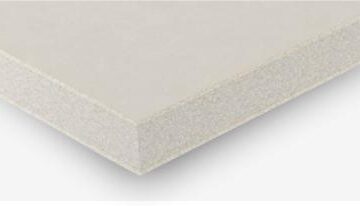
To enhance the fire resistance of steel structures, fire protection boards are often applied to steel beams and columns. These boards insulate the steel, slowing the rate at which it heats up during a fire. By delaying the temperature increase, fire boards help the steel maintain its structural integrity for longer periods, allowing more time for safe evacuation and firefighting efforts. This application is critical in ensuring that steel structures can withstand the extreme conditions modeled by the ISO curve, thereby preventing potential structural collapse during a fire.
How Aestuver fire boards are used in reference to the ISO 834 fire curve?
Aestuver boards have been tested to numerous requirements under the standard fire curve.
These include application of Aestuver fireproofing boards for:
- EI60 partitions
- EI120 partitions
- EI120 shaft walls
- EI60 suspended ceilings
- EI120 suspended ceilings
- steel encasement or steel enclosure (fire protection of structural steel)
- fire protection of concrete (upgrading concrete fireproofing)
- fire rated cable enclosures
Each application can be verified with a relevant fire test report or classification report.
Conclusion
The ISO 834 fire curve is a pivotal element in global fire safety engineering, providing a standardized approach to testing and evaluating the fire resistance of building materials and structures. Its adoption in national standards across the EU, UK, Australia, USA, Japan and China underscores its importance in ensuring that buildings are constructed with safety in mind. By providing a reliable and consistent measure of how materials behave under fire conditions, the ISO curve helps to protect lives and property, making it an indispensable tool in the quest for safer buildings worldwide.
Aestuver fire boards provide numerous application possibilities to comply with the cellulosic fire curve. Some of these applications can be found in the overall catalogue for structural fire protection.
Full references to national standards:
ASTM E119-20 – Standard Test Methods for Fire Tests of Building Construction and Materials
These test methods are designed to assess how long different types of building elements can contain a fire, maintain their structural integrity, or demonstrate both characteristics during a controlled furnace test. The test subjects a specimen to a standardized fire, carefully regulated to reach specific temperatures over a defined duration. In cases where required, such as with wall assemblies, the fire test is followed by a standard fire hose stream exposure. The results offer a comparative measure of how various building elements perform under these fire conditions.
BS 476: Part 20: 1987 (BS EN 1363: Part 1: 2012) – Methods for determination of the fire resistance of construction elements (general principles)
This standard outlines the general procedures and equipment needed to assess the fire resistance of construction elements. It should be used alongside BS 476: Parts 21 to 24, which provide detailed guidelines for testing specific construction elements.
BS 476: Part 21: 1987 (BS EN 1365: Parts 1 to 4) – Methods for determination of the fire resistance of load bearing construction elements
This standard outlines the procedures for evaluating the fire resistance of load-bearing beams, columns, floors, flat roofs, and walls. Beams and columns are tested for their load-bearing capacity, while dividing elements like floors, flat roofs, and walls are assessed based on their load-bearing capacity, integrity, and insulation.
BS 476: Part 22: 1987 (BS EN 1364: Parts 1 and 2: 1999) – Methods for determination of the fire resistance of non-load bearing construction elements
This standard outlines the methods for assessing the fire resistance of non-load bearing partitions, door sets, shutter assemblies, ceiling membranes, and glazed construction elements, focusing on their integrity and, where applicable, insulation properties.
BS 476: Part 23: 1987 – Methods for determination of the contribution of components to the fire resistance of a structure
This standard details the testing procedures for assessing how suspended ceilings enhance the fire resistance of steel beams, as well as how intumescent seals contribute to the fire resistance of timber door assemblies.
BS 476: Part 24: 1987 (BS EN 1366: Part 1: 1999) – Methods for determination of the fire resistance of ventilation ducts
This standard outlines the procedures for testing and evaluating a duct assembly’s capability to prevent fire from spreading between fire compartments. The results are measured in terms of stability, integrity, and insulation performance.
JIS A 1304: Method of fire resistance test for structural parts of buildings
PN-B-02851-1 FIRE PROTECTION OF BUILDINGS – METHOD OF TEST FOR FIRE RESISTANCE OF ELEMENTS OF BUILDING CONSTRUCTION – GENERAL REQUIREMENTS AND CLASSIFICATION – norm was withdrawn and superseded by
which was also withdrawn and superseded by

3 Comments
What are the design fire curves for tunnels? - Tunnel Passive Fire protection - fire boards and fire cladding · 27 August 2024 at 2:52 pm
[…] You can read more about the ISO Curve here. […]
Concrete Spalling in Tunnel Fires: Causes, Effects, and Prevention · 29 November 2024 at 11:15 am
[…] ISO 834 Fire Curve: Represents a standard time-temperature relationship for structural fire design. […]
RWS fire curve - Tunnel Passive Fire protection - fire boards and fire cladding · 10 December 2025 at 12:23 pm
[…] ISO 834 Curve: The ISO 834 fire curve is a standard fire curve used in general building design. It represents […]