Differences Between Road Tunnel Fires and Building Fires
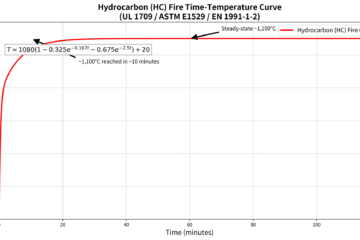
Fires in road tunnels differ significantly from those typically encountered in buildings. Road tunnel fires occur in a highly confined space with limited ventilation, which causes heat and smoke to accumulate rapidly rather than dissipate. Vehicle fires, especially those involving heavy goods vehicles or fuel tankers, can generate extremely high temperatures—often exceeding 1,000–1,300°C within minutes—and follow intense time-temperature curves such as the RWS (Rijkswaterstaat) curve.

Source: https://commons.wikimedia.org/wiki/File:Rws_tunnel_curve.jpg
These fires tend to burn longer and hotter due to the enclosed geometry, potential for fire spread between vehicles, and challenges in access for firefighting. In contrast, standard building fires are more open, allowing better heat dissipation and easier intervention, with temperatures usually governed by the ISO 834 cellulosic curve.
Because of these conditions, high-strength concrete tunnel linings are vulnerable to explosive spalling (where moisture in the concrete turns to steam and causes fragments to break away) and overheating of reinforcement, which can lead to structural weakening or collapse.
Passive fire protection, in the form of a fire-resistant board such as the Aestuver Tx, is therefore necessary. It acts as a thermal barrier that limits heat transfer to the underlying concrete structure, prevents spalling, maintains structural integrity for the required duration (enabling safe evacuation and emergency response), and reduces the risk of costly repairs or prolonged closures. Unlike active systems that may depend on detection and water supply, passive protection remains reliable even under extreme conditions.
Fire protection board Tx: Enhancing Fire Safety for Road Tunnel Fire Protection

Fire protection board Tx is a popular choice in the construction and infrastructure development, particularly in high-risk environments such as tunnels and underground transportation systems. The Aestuver Tx fire protection board (that’s the full name of the product) represents a high-performance solution engineered to address the stringent demands of fire resistance. This article examines its key attributes, applications, and technical specifications, drawing from detailed product documentation to provide comprehensive insights for professionals in the sector.
Overview of the fire protection board Tx
The Aestuver Tx fire protection board is a cement-bound, glass-fiber-reinforced lightweight concrete board designed for structural fire protection. Classified as non-combustible under EN 13501-1 with an A1 rating, it is composed entirely of mineral materials, ensuring it does not contribute to fire propagation. This board is particularly suited for underground transportation systems, where it withstands exposure to moisture, frost, and significant mechanical loads, offering reliable performance in challenging conditions.
Key Properties of the Fire Protection Board Tx

The Aestuver Tx fire protection board tx exhibits a range of advanced properties that contribute to its effectiveness:
– Non-Combustible Nature: Achieves an A1 classification per DIN EN 13501-1, confirming its incombustibility.
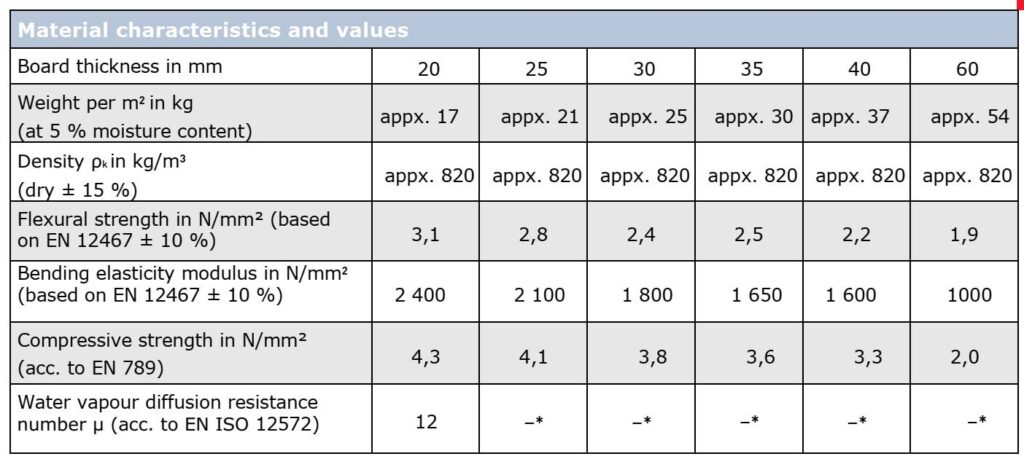
– High Compressive Strength: Values range from 2.0 to 4.3 N/mm², varying by board thickness.
– Superior Flexural Strength: Bending strength between 1.9 and 3.1 N/mm², providing resilience against deformation.
– Abrasion Resistance: Designed to endure wear in demanding environments.
– Resistance to Water and Frost: Maintains integrity in humid or freezing conditions.
– Ease of Maintenance and Installation: Cleanable surface and straightforward application processes.
– Thermal Characteristics: Thermal conductivity of approximately 0.19-0.21 W/mK and specific heat capacity of 0.9 kJ/kgK.
With a dry density of around 800-820 kg/m³, the board balances strength and manageability, facilitating efficient handling during installation.
Applications of the Fire Protection Board Tx with the focus on the Road Tunnel Fire Protection
The Aestuver Tx fire protection board tx is primarily utilized in underground infrastructure to safeguard structural concrete from fire exposure. It can be affixed via screws or anchors as protective cladding, enabling compact system designs that comply with rigorous fire resistance standards, including:
- RWS60, RWS120 and RWS180 (Dutch tunnel fire curves)
- HCM120, HCM180 (Hydrocarbon Modified curve)
- HC120, HC180
- ISO240 / NFPA 290 (Extended fire exposure protocols)
This makes it an optimal choice for tunnels, subways, and similar facilities where elevated fire risks are present. Its durability against moisture and frost also supports applications in semi-exposed or outdoor settings, contributing to reduced long-term damage and associated costs in fire incidents.
Technical Specifications and Dimensions
For engineering and planning purposes, the following specifications are pertinent:
Material Properties by Thickness
Standard Dimensions
– Length: 2600 mm
– Width: 625 mm (622 mm for 60 mm thickness)
– Tolerances: ±1 mm for length and width, ≤2 mm for diagonal difference, ±1 mm for thickness
Other dimensions are also possible – 2600×1250, 3000×625, 3000×1250
Certifications and Approvals
– European Technical Assessment: ETA-17/0170
– Building Material Classification: A1 (non-combustible)
– IMO FTPC Part 1: Non-combustible
The board aligns with all usage categories under EAD 350142-00-1106, including those for extreme weathering conditions.
Advantages of the Aestuver system for Road Tunnel Fire Protection
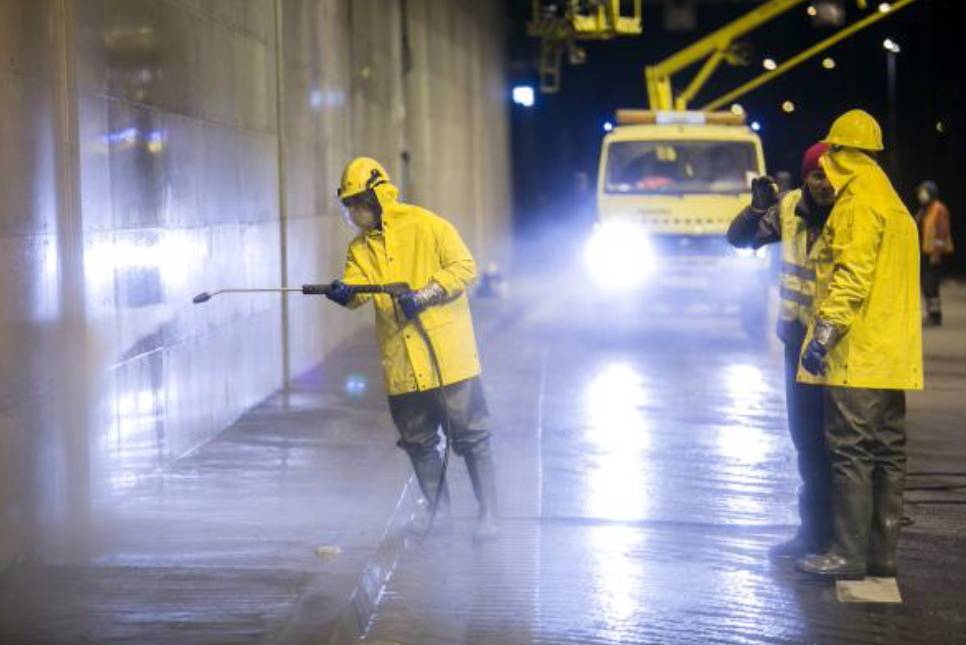
Aestuver road tunnel fire protection cleaned on regular basis in Gdansk Tunnel, Poland (photo credit: Rafał Dylewski, Gdanks Road Authority).
Selecting the Aestuver Tx fire protection board tx offers several benefits for infrastructure projects requiring enhanced fire protection. Its lightweight composition (e.g., approximately 21 kg/m² for 25 mm thickness) simplifies transportation and installation without necessitating specialized heavy equipment. As a mineral-based material free from harmful substances, it is fully recyclable, supporting sustainable construction practices. Furthermore, it has demonstrated resilience in tests involving chemical exposure, abrasion, and freeze-thaw cycles, ensuring longevity in harsh operational environments.
Key advantages for tunnel owners and operators from the perspective of road tunnel fire protection:
- reliable and fully tested system in compliance with tunnel fire curves (HCM, HC, RWS)
- easy to clean surface
- long design life
- simple installation system which allows easy replacement
Guidelines for Storage, Transport, and Installation
To maintain the integrity of the Aestuver Tx fire protection board tx, store boards horizontally on flat surfaces to prevent deformation. Their resistance to frost and water permits outdoor storage, though protective covering is recommended if subsequent surface treatments are planned to avoid contamination.
For transport, utilize forklifts or panel carts horizontally; individual boards should be carried upright using gloves or dedicated lifters. Installation is efficient, typically involving cladding over concrete substrates, and is adaptable to both linear and curved tunnel geometries.
Conclusion
The Aestuver Tx fire protection board tx provides a robust and versatile solution for fire protection in demanding infrastructure applications. Its combination of superior performance, compliance with international standards, and practical handling characteristics positions it as a preferred choice for engineers and contractors. For further details, consult the manufacturer’s technical data sheets or contact authorized suppliers.
How can we support you with your road tunnel fire protection enquiries?

0 Comments